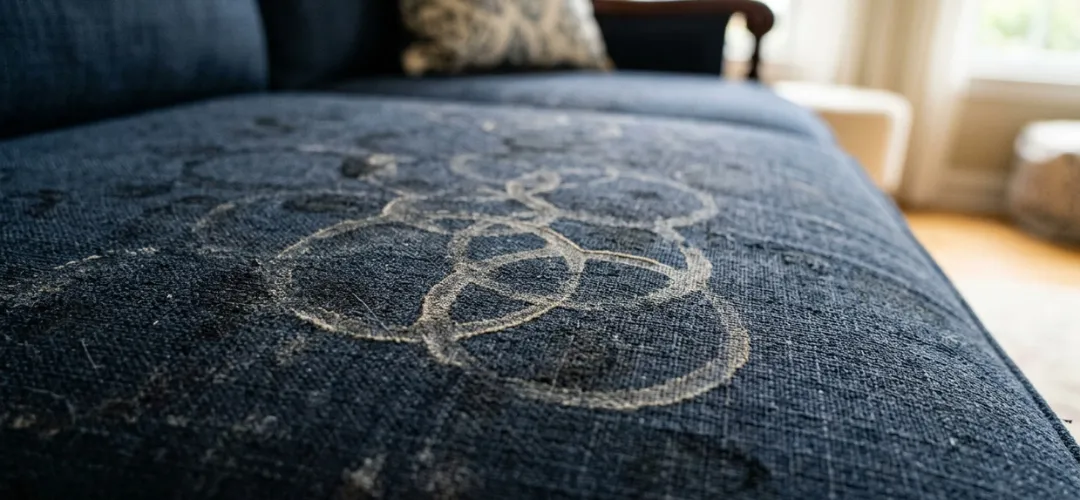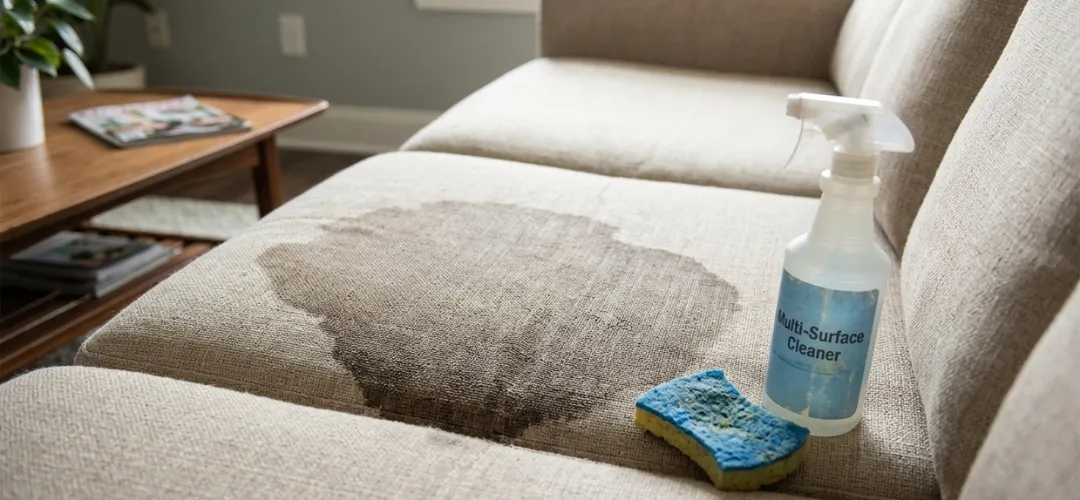
Why do water rings keep appearing on fabric furniture even after you clean the spot with care? You blot the spill, step back, and an hour later the mark looks bigger than the mess you started with.
If that sounds familiar, you are not imagining things. A water stain on a fabric couch cushion usually is not about the water at all. It is the dirt, soap, body oils, and minerals getting pulled to the surface as the fabric dries.
So why does your couch keep getting these rings, and what should you actually do about it? Let us walk through what causes them, why they come back, and how to clean them without making the spot worse.
What Water Rings on Fabric Furniture Actually Are
A water ring is the visible outline left behind when moisture dries unevenly in your couch. The water itself is rarely the problem. What it carries to the surface is.
Think of your cushion like a sponge that has been quietly soaking up daily life. Dust, crumbs, leftover detergent, and skin oils settle deep into the fibers and padding. When water hits that area, it loosens all of it and drags it along as it dries.
That is why a clear glass of water can still leave a stain. The water rings on fabric furniture you see are not new dirt. They are old dirt that finally became visible.
You will hear these marks called a few different things:
- Water stains on upholstery when the edges look dark or chalky
- Water spots on couch arms where a cold glass left condensation
- Fabric furniture stains when the ring blends into older buildup
In every case, the cause is the same. Moisture moves, it picks up residue, and it leaves that residue behind in a ring shape once the fabric dries.
Why Water Rings Keep Coming Back After Cleaning
Here is the frustrating part. You clean the spot, it looks fine while wet, then the ring reappears as it dries. That cycle is not bad luck. It is physics.
When you wet a small area of your couch, the moisture soaks into both the fabric and the cushion padding beneath it. As that spot dries, the water has to go somewhere. It travels outward and upward to evaporate, and it carries hidden residue with it the whole way.
This is called the wicking effect. The moisture acts like a tiny conveyor belt, pulling buildup toward the outer edge of the wet area. Once the water evaporates, the residue stops at that border and dries into a visible ring.
A few things keep this cycle going:
- Wicking from deep inside the cushion. Moisture reaches dirt and oils buried in the padding, then lifts them as it dries.
- Mineral deposits from tap water. Calcium and magnesium in regular tap water stay behind on the fibers and form a stiff, chalky outline.
- Leftover detergent residue. Soap from an earlier cleaning reactivates the moment new moisture hits it, then rises to the surface.
- Uneven drying. The center and the edges dry at different speeds, which creates that sharp tide mark.
- Over-wetting during spot cleaning. Too much water pushes residue farther out, so the ring ends up larger than the original spill.
Once you understand that water rings are a drying problem, not a cleaning problem, the fix starts to make sense.
What Causes Water Rings on Upholstery
To answer what causes water rings on upholstery in plain terms, the issue almost always traces back to one of five culprits. Here is how to tell them apart.
Tap Water and Mineral Residue
Regular tap water carries dissolved minerals. When that water evaporates from your couch, the minerals do not leave with it. They stay on the fibers and dry into a crusty ring. Distilled water has none of these minerals, which is why it is the safer choice for any spot cleaning.
Dirt, Oils, and Old Cleaning Residue
Your couch holds more than it shows. Body oils, dust, and detergent residue from past cleanings sit deep in the fibers. Add moisture, and all of it gets loosened and redistributed. The ring you see is that buildup settling at the drying line.
Uneven Spot Cleaning
Cleaning a tight circle the exact size of the stain almost guarantees a ring. The wet center dries differently than the dry edges around it. That abrupt change in moisture is what creates the hard outline.
Slow Drying in Cushions and Padding
Moisture trapped inside cushion padding dries slowly, especially in humid weather. The longer it stays damp, the more time residue has to travel and pool into a mark. Slow drying is one of the biggest hidden causes of recurring rings.
Fabric Type and Cleaning Code Issues
Some fabrics react badly to water. Check the tag for the cleaning code before you do anything:
| Code | What it means |
| W | Water-based cleaners are safe |
| S | Use solvent-based cleaners only |
| WS | Either water or solvent products work |
| X | Vacuum only or professional cleaning only |
If your couch is an S-coded fabric, water-based cleaning can damage the dye or finish. Light colors, textured weaves, and microfiber show rings more easily than darker, tighter fabrics. If you are battling microfiber couch stains, gentle technique matters even more.
Best Way to Clean Water Rings from Upholstery
Before the steps, understand the principles. The best way to clean water rings from upholstery is to control moisture, not flood the fabric. Get these right and the steps almost take care of themselves.
- Clean the whole section, not just the circle. Treat the entire cushion face so the fabric dries evenly with no new edge.
- Use the least moisture possible. Damp, never soaked. Excess water sinks into the padding and slows drying.
- Stick to distilled water. No minerals means no mineral rings.
- Blot, do not scrub. Scrubbing frays fibers and pushes residue deeper.
- Dry quickly and evenly. Steady airflow stops residue from settling into a new mark.
These same principles guide good upholstery stain removal across almost every fabric type. Once you treat the full panel instead of the spot, proper stain removal from upholstery gets far more forgiving.
Step by Step: How to Get Rid of Water Rings on Upholstery
So, how to get rid of water rings on upholstery? Follow these six steps in order. This is the same approach we use for removing water rings from fabric furniture before a problem sets in for good.
Step 1: Vacuum the Area First
Start dry. Use a soft brush attachment and vacuum the ring and the area around it. This lifts loose dust and crumbs before any moisture turns them into muddy residue. Skip this step and you give the water more grime to drag around.
Step 2: Dampen the Full Section with Distilled Water
Lightly dampen a clean microfiber cloth with distilled water, then blot the entire cushion face, not just the ring. Re-wetting the whole panel sounds backward, but it works. Since rings come from uneven moisture, an even light dampening helps the fabric dry as one piece instead of in patches.
Step 3: Blot Gently with a Clean Cloth
Press a dry white cloth onto the damp area to lift moisture and loosened residue. Work from the outer edge toward the center. Use gentle pressure and resist the urge to rub back and forth.
Step 4: Use a Mild Upholstery Safe Cleaner If Needed
If the ring lingers, mix a few drops of mild dish soap into distilled water. Check the fabric cleaning code first, then test the mix on a hidden spot. Apply the solution to your cloth, never directly to the couch, and blot the full section. Less soap is always better here.
Step 5: Rinse Out Residue Carefully
Go back over the area with a separate cloth dampened in plain distilled water. This pulls out any leftover detergent residue. Skip this and the dried soap becomes the source of your next ring.
Step 6: Dry the Area Quickly and Evenly
Set up a fan for steady airflow drying. Avoid hot hair dryers unless the manufacturer says heat is safe, since high heat can set residue and damage some fabrics. Feathering the edges as it dries keeps the border soft instead of sharp.
Mistakes That Make Water Rings Worse
Most ruined couches are the result of good intentions. These are the missteps we see most often, and each one turns a small mark into a bigger one.
- Scrubbing too hard. This frays fibers and spreads residue deeper into the weave.
- Cleaning only the center. Treating the spot alone leaves a dark, wider edge around it.
- Using tap water. The minerals guarantee a fresh ring once the spot dries.
- Soaking the cushion. Over-wetting drives moisture into the padding, which dries slowly and unevenly.
- Using too much soap. Excess detergent dries into its own stiff halo.
- Trying random DIY hacks on delicate fabric. Vinegar and baking soda mixes help on some couches and wreck others. They are not safe for every fabric, especially S-coded or vintage pieces.
If you have asked yourself “what should I use to clean my fabric sofa?” the honest answer is less product, more patience, and distilled water.
How to Prevent Water Rings from Coming Back
You did the hard work. Now let us keep the rings from returning. A few habits protect your couch and almost none of them take real effort.
- Always reach for distilled water when you spot clean at home.
- Clean the entire affected panel instead of one small circle.
- Avoid oversaturating the fabric. Damp beats soaked every time.
- Dry quickly with airflow from a fan, especially in humid weather.
- Keep residue from building up by vacuuming your upholstery regularly.
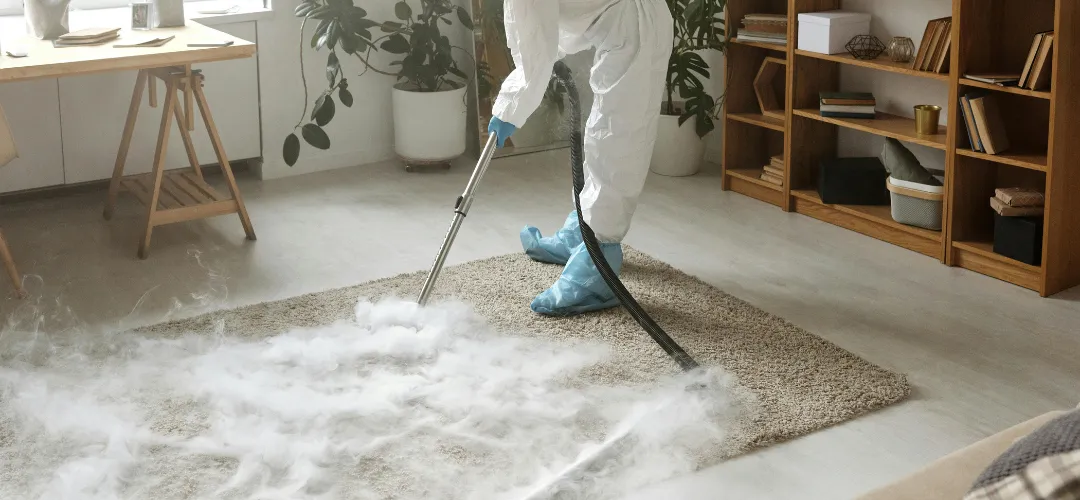
- Schedule periodic professional upholstery cleaning to clear the deep buildup that home cleaning leaves behind.
That last point matters more than people expect. Routine deep cleaning removes the hidden body oils and detergent residue that cause rings in the first place. With professional upholstery cleaning on a regular schedule, simple spills stop turning into stubborn marks.
A quick note on a related question. If you came here wondering how do you remove water rings from wood furniture, this guide focuses on fabric, not wood. Marks on water rings on wood furniture sit in the finish, so you remove water rings from wood furniture with heat or oil-based methods. A water ring on wood furniture follows a completely different repair process than fabric does.
Stop the Cycle of Water Rings Before They Set In
Here is what it all comes down to. A water ring is rarely a water problem. It is a residue problem plus uneven drying. Once you know that, the fix stops feeling like guesswork and starts feeling like a routine you can repeat.
If your couch still shows rings after your best effort, we are ready to help. At Oasis Carpet & Upholstery, we provide gentle, fabric-safe upholstery cleaning that removes deep buildup, dries evenly, and helps your furniture look fresh again.
Frequently Asked Questions
1. Can professional upholstery cleaning remove old water rings?
Yes. Professional upholstery cleaning can often remove old water rings by extracting deep-set dirt, detergent residue, and minerals that home cleaning cannot reach.
2. Are water rings on fabric furniture permanent?
Not always. Most water rings can be removed with proper treatment, though older or repeatedly cleaned stains may require professional restoration.
3. Should I use tap water or distilled water to clean upholstery?
Distilled water is the better choice because it contains no minerals that can leave behind new stains or chalky water rings.
4. Why does my couch look dirtier after I clean one spot?
Spot cleaning can cause hidden dirt and oils inside the cushion to wick to the surface as the fabric dries, creating a larger visible ring.
5. How often should upholstered furniture be professionally cleaned?
Most upholstery should be professionally cleaned every 12 to 24 months, or more frequently if you have pets, children, or heavy daily use.